The science
The Cinderella Carbon Sink: Why Indonesia's Peatlands Matter More Than You Think
Peatlands cover barely 3 percent of the planet's land surface, yet hold nearly twice as much carbon as every forest on Earth combined.
Peatlands rarely make headlines the way rainforests do. There are no charismatic megafauna, no postcard canopies - just waterlogged, often swampy ground that looks, to the untrained eye, unremarkable. Scientists have taken to calling tropical peat the "Cinderella" of carbon storage: overlooked, underfunded, and vastly more important than its reputation suggests.[1]
How a swamp becomes a carbon vault
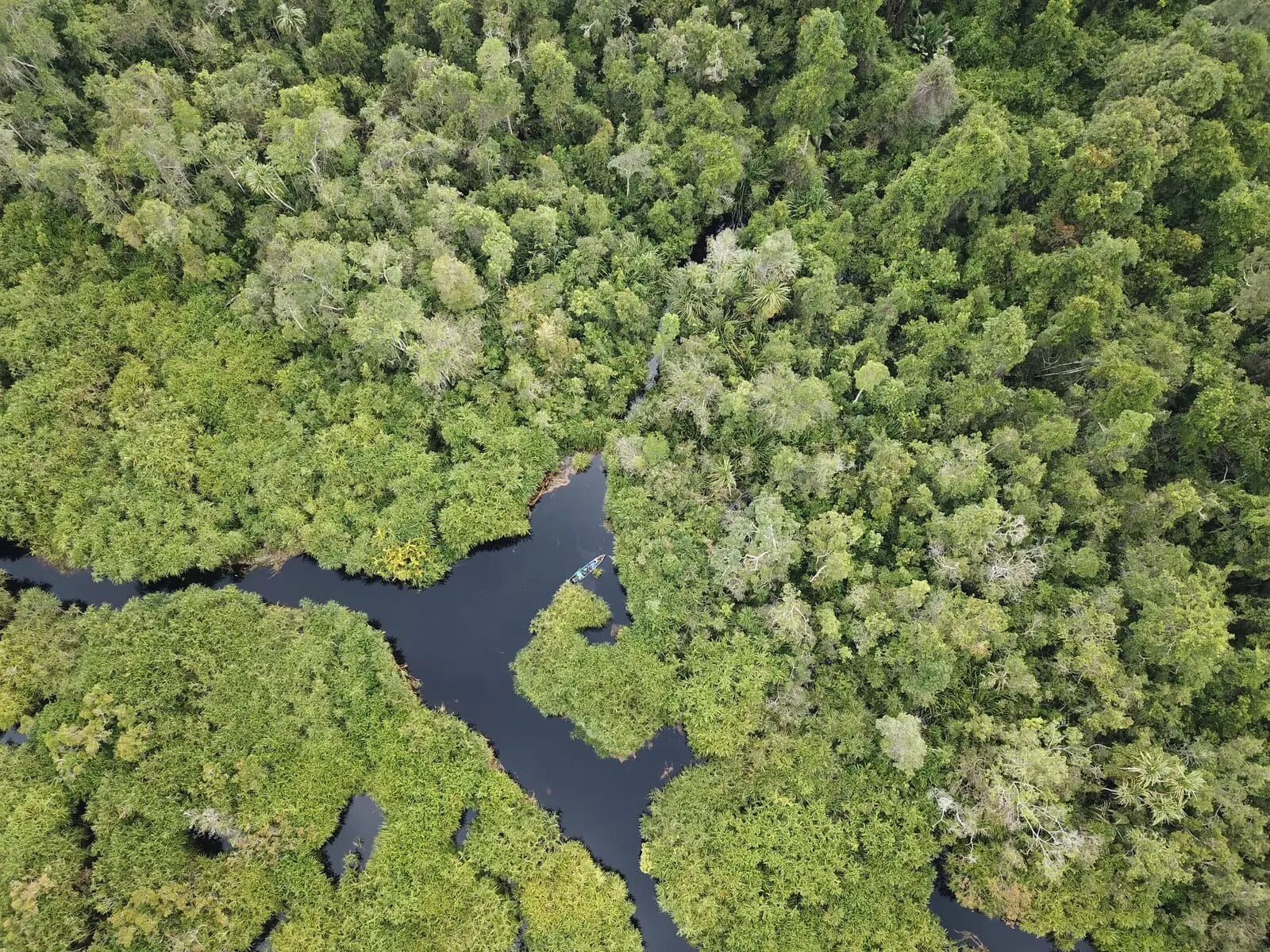
Peat forms when dead plant material accumulates faster than it can decompose. In a normal forest, fallen leaves and wood are broken down by oxygen-breathing microbes and their carbon returns to the atmosphere within years. In a peat swamp, the ground stays waterlogged year-round, starving the soil of oxygen. Decomposition slows to a crawl, and instead of disappearing, dead vegetation piles up, compresses, and locks its carbon into the ground - sometimes to depths of ten metres or more, built up over thousands of years.
The result is a carbon storage system with no real technological equivalent. Peatlands cover roughly 3 percent of Earth's land surface but store an estimated 550 billion tonnes of carbon - close to double the amount held in all of the world's forests combined.[1,2] They exist in more than 180 countries, from Scotland's open peat bogs to the vast forested peat dome of the Congo Basin's Cuvette Centrale, the largest tropical peatland on the planet.[1] Indonesia's own peat swamp forests, concentrated in Sumatra, Kalimantan and Papua, rank among the most extensive tropical peatlands anywhere.
The switch that turns a sink into a source
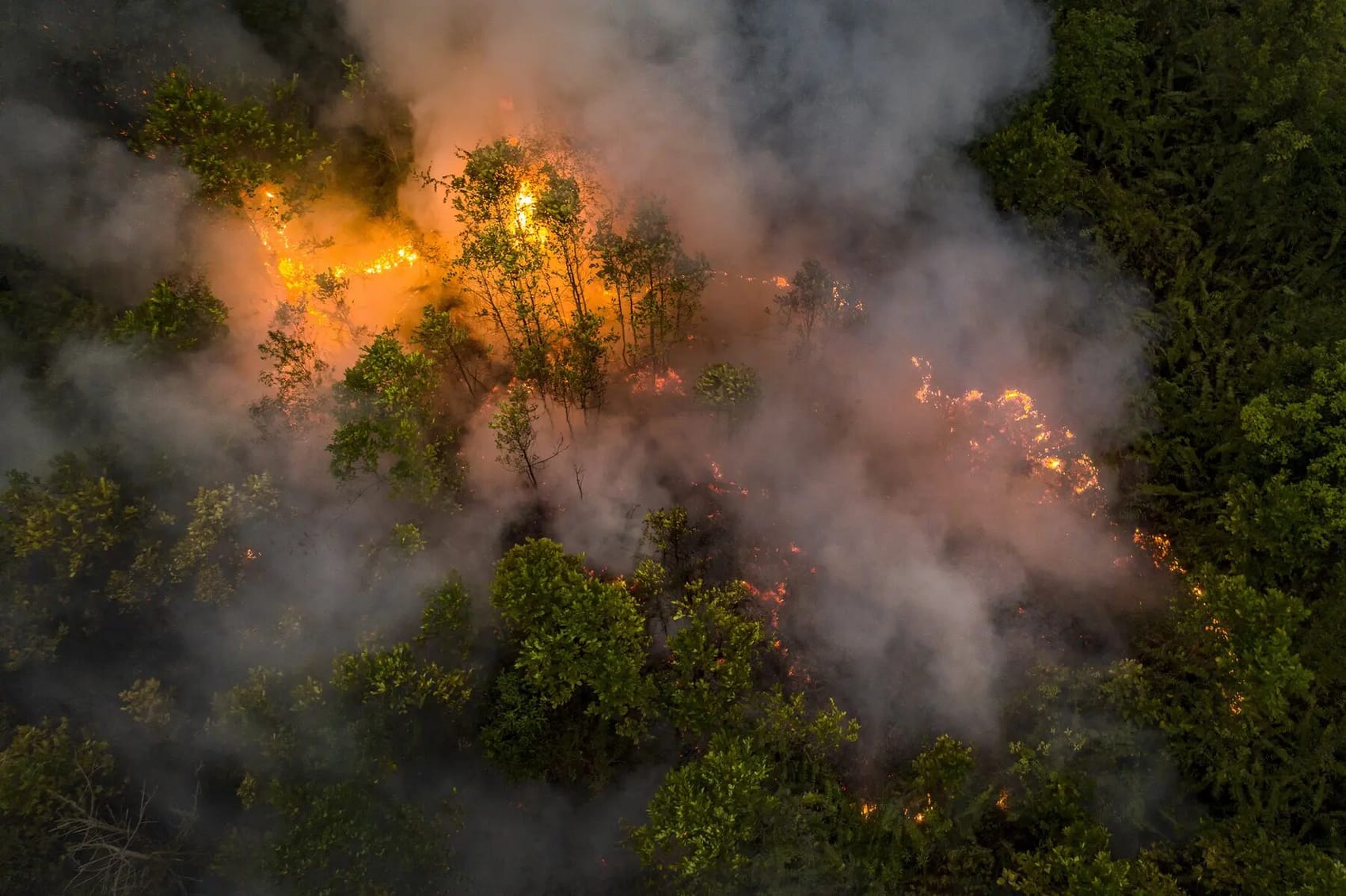
The same chemistry that makes peat such an effective carbon vault also makes it dangerous once disturbed. Drain a peat swamp for agriculture or plantation development, and oxygen reaches soil carbon that has not been exposed to air in millennia. Microbes that had been dormant reactivate, decomposition resumes, and the peat begins to oxidise - releasing carbon dioxide, subsiding physically as the ground literally shrinks, and drying out into a highly combustible fuel bed. Burning peat releases up to 100 times more carbon than burning an equivalent area of trees, because the fire consumes not just surface vegetation but metres of compacted, carbon-dense soil beneath it.[1]
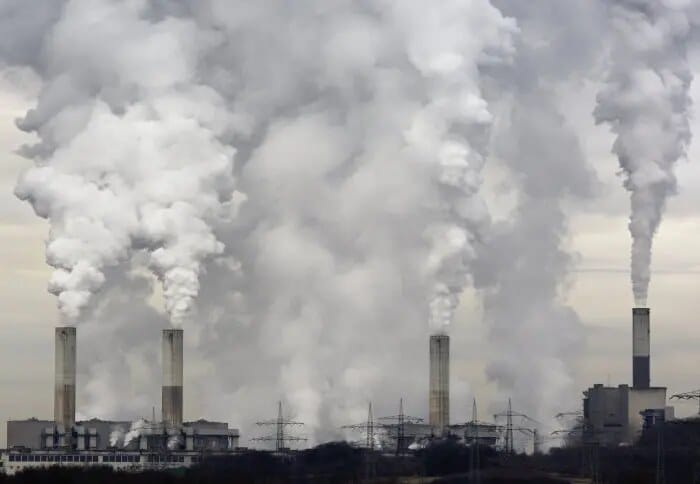
Globally, degraded and drained peatlands emit an estimated 1.5 to 2.5 billion tonnes of greenhouse gases every year - roughly on par with the annual emissions of a major industrial economy - even though only about a quarter of the world's peatlands are currently under this kind of pressure, mostly from agricultural conversion.[1]
The protection gap
Despite their outsized climate role, peatlands remain thinly protected: only about 17 percent carry formal protected status, a far lower share than tropical rainforests generally receive.[1] That gap is a large part of why organisations from the UN Environment Programme to the World Economic Forum have spent the past several years pushing peat further up the climate agenda, framing it plainly: "peatlands store twice as much carbon as all the world's forests."[2]
The case for restoration
The good news is that peat responds to intervention faster than most degraded ecosystems. Rewetting a drained peatland - blocking the canals that drained it and letting the water table rise back to the surface - halts oxidation almost immediately and allows the soil to begin re-saturating, cutting off the fire risk that comes with dry peat. Analysts estimate that conserving and restoring the world's tropical peatlands could reduce global annual emissions by roughly 800 million tonnes of CO2 equivalent - about 2 percent of worldwide emissions from a single, targeted intervention.[1] Indonesia's own restoration efforts have targeted rewetting close to one million hectares of degraded peat.[1] Getting there at scale, however, will require serious capital: nature-based solutions of this kind are estimated to need more than $8 trillion in investment between 2025 and 2050.[1]
For carbon project developers working in Indonesia, the lesson is straightforward. A hectare of intact peat swamp is not simply land that happens to be wet - it is one of the most carbon-dense ecosystems on the planet, and one of the most consequential to keep that way.
Sources
1. Peatlands store twice as much carbon as forests - here's what we can do to save them - World Economic Forum
2. Peatlands store twice as much carbon as all the world's forests - UN Environment Programme
3. Peatlands and climate change - IUCN