Biodiversity
Papua: The Last Great Wilderness Standing Between Indonesia and a Biodiversity Collapse
Home to the world's third-largest rainforest and half of Indonesia's biodiversity, Papua remains one of the least-altered tropical landscapes left on Earth.
After the Amazon and the Congo Basin, Papua holds the third-largest contiguous rainforest on Earth - and unlike much of the tropics, large stretches of it remain genuinely intact rather than fragmented by decades of logging roads and plantation grids.[1] Across the region's roughly 34.9 million hectares of forest, a substantial share remains primary, old-growth habitat, giving Papua an ecological completeness that is increasingly rare anywhere in the tropics.[1]
An outsized share of a megadiverse nation
Indonesia is already recognised as one of the world's most biologically diverse countries. Papua alone accounts for roughly half of that national biodiversity.[1] The numbers, compiled from regional biodiversity assessments, are difficult to fully absorb: an estimated 15,000 to 20,000 plant species, around 2,000 species of orchid, 602 bird species, 125 mammal species, 223 reptile and amphibian species, some 1,200 species of marine fish in its surrounding reefs, and a projected 150,000 insect species - a huge proportion of them found nowhere else on the planet.[1] Scientists working in the region routinely describe finding species new to record, suggesting the true tally is still incomplete.
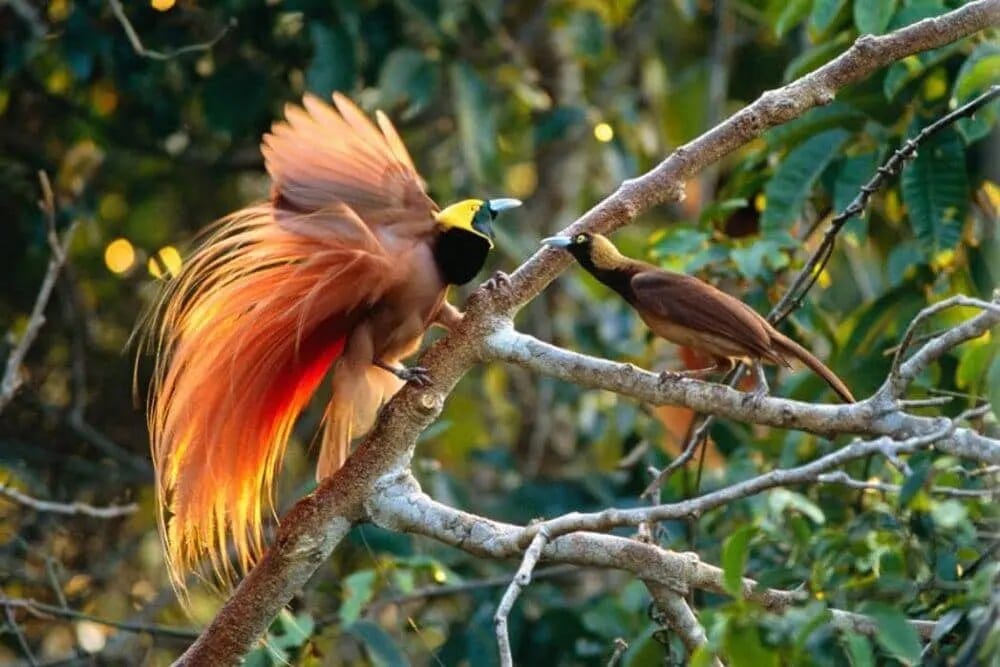
Papua's most iconic residents may be its birds-of-paradise - a family of roughly 40 species renowned for elaborate plumage and courtship displays performed almost nowhere else on Earth, and long a symbol of the island's singular evolutionary history.
A carbon reservoir as significant as its biodiversity
Papua's forests are not only a biodiversity stronghold; they are also a major climate asset in their own right. Regional estimates put the forest's carbon sequestration at roughly 52 million tonnes of CO2 equivalent removed from the atmosphere every year, with an estimated 15 billion tonnes stored cumulatively in trees and soils - a stock roughly equivalent to offsetting an entire country the size of Singapore's annual emissions.[1]
Commitments on paper, pressure on the ground
Papuan provincial governments have made some of Indonesia's boldest conservation pledges. The 2018 Manokwari Declaration committed the region to protecting at least 70 percent of its land area, positioning Papua as a self-declared "conservation province."[1] A longer-range "Papua 2100 Vision" sets an even more ambitious marker: preserving 90 percent of natural forest cover by the turn of the next century.[1]
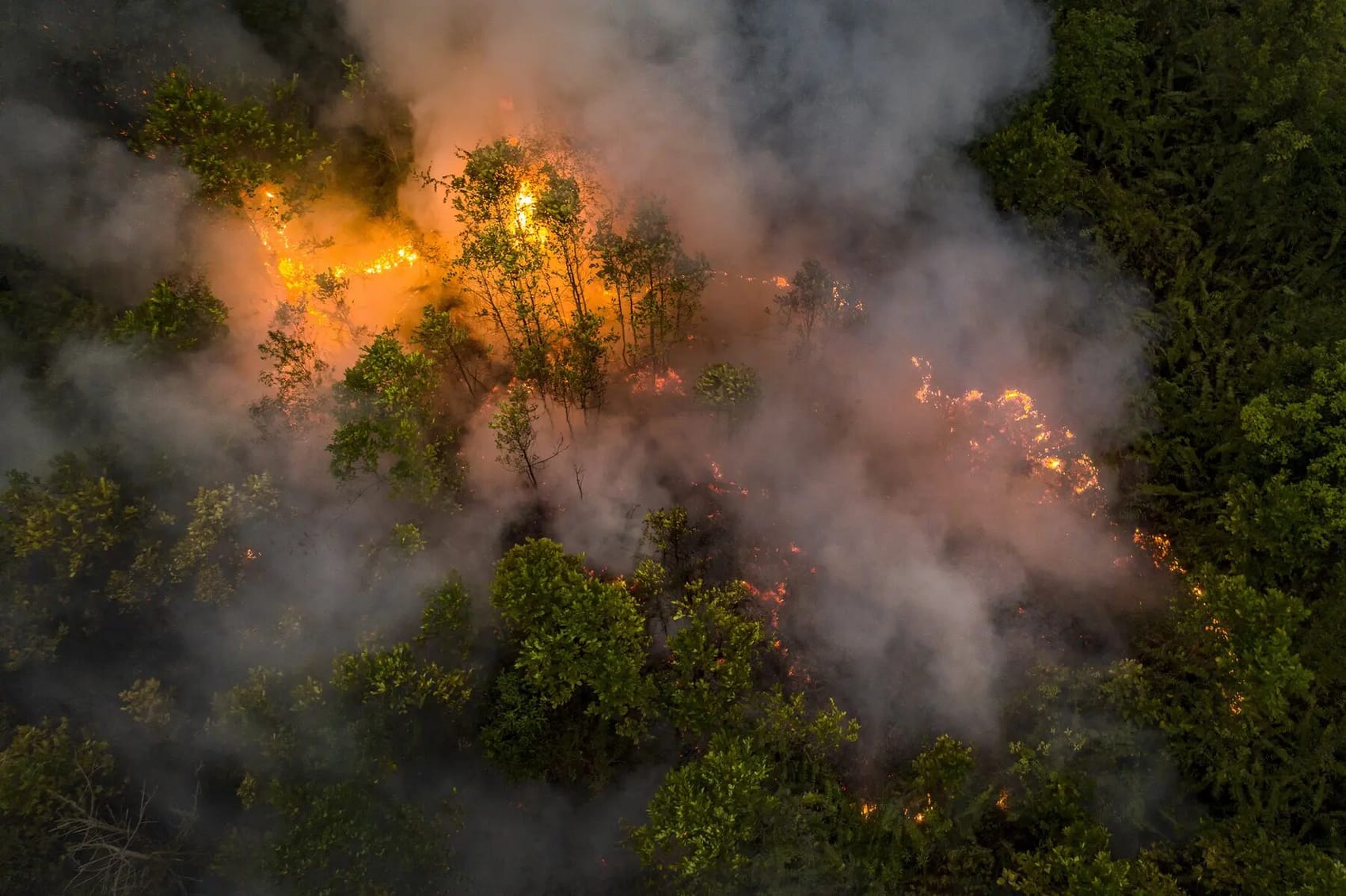
Roughly 9 million hectares of Papuan land have already been allocated to land-based concessions - oil palm plantations, timber extraction, mining and infrastructure - placing real pressure on the very forests these commitments are meant to protect.[1]
Road-building in particular has emerged as one of the most consequential threats, since new access routes tend to open otherwise-inaccessible forest to logging, land clearing and settlement well beyond the road corridor itself. Conservation organisations working across the region have flagged plantation expansion and road development as the two forces most likely to determine whether Papua's forest stays intact or begins fragmenting the way Sumatra's and Kalimantan's already have.[2]
Why the next decade is decisive
Papua occupies a rare position in global conservation: a landscape large and intact enough that its fate is not yet locked in. Unlike regions where restoration is the only remaining option, Papua still offers the far cheaper, far more effective alternative - protecting what is already standing before it is lost. That makes the region a priority not only for biodiversity conservation on its own terms, but for any nature-based carbon strategy seeking to protect large, high-integrity forest carbon stocks at a moment when Southeast Asia's tropical forests, more broadly, are coming under mounting climate and land-use pressure.
Sources
1. Protecting the Landscape of Tanah Papua - World Resources Institute Indonesia
2. Plantations and roads strip away Papua's forests. They're just getting started - Mongabay
3. Bird and orchid sanctuary in Papua showcases the rich biodiversity of Indonesia - CIFOR-ICRAF Forests News