
 Insights
Communities
Made by Hand, from the Forest: The Noken of Papua
In Papua, the noken bag is still made by hand from bark, leaves and orchid fibre gathered from the forest. The tradition lasts only as long as the forest does.
Watch Papuan women heading to market and you will often see a bag hung from the head and down the back. This is the noken, and it is used for far more than shopping: it carries garden produce, firewood and even small children.[1][2] It is one of Papua's best-known traditional crafts, and one of the clearest links between everyday life and the forest.
Almost everything that goes into a noken comes from the land around each village: the inner bark of young trees, the leaves of pandanus and pineapple, the fibre of a golden orchid, and colours from seeds, turmeric and leaves. That makes every noken a living record of what the forest provides, and a clear sign of what is lost when the forest disappears.
This article looks closely at the noken: how it is made, who makes it, how it differs between Papua's peoples, how the skill is passed on, what is putting it at risk, and why it depends on healthy forests.
A bag that carries a whole way of life
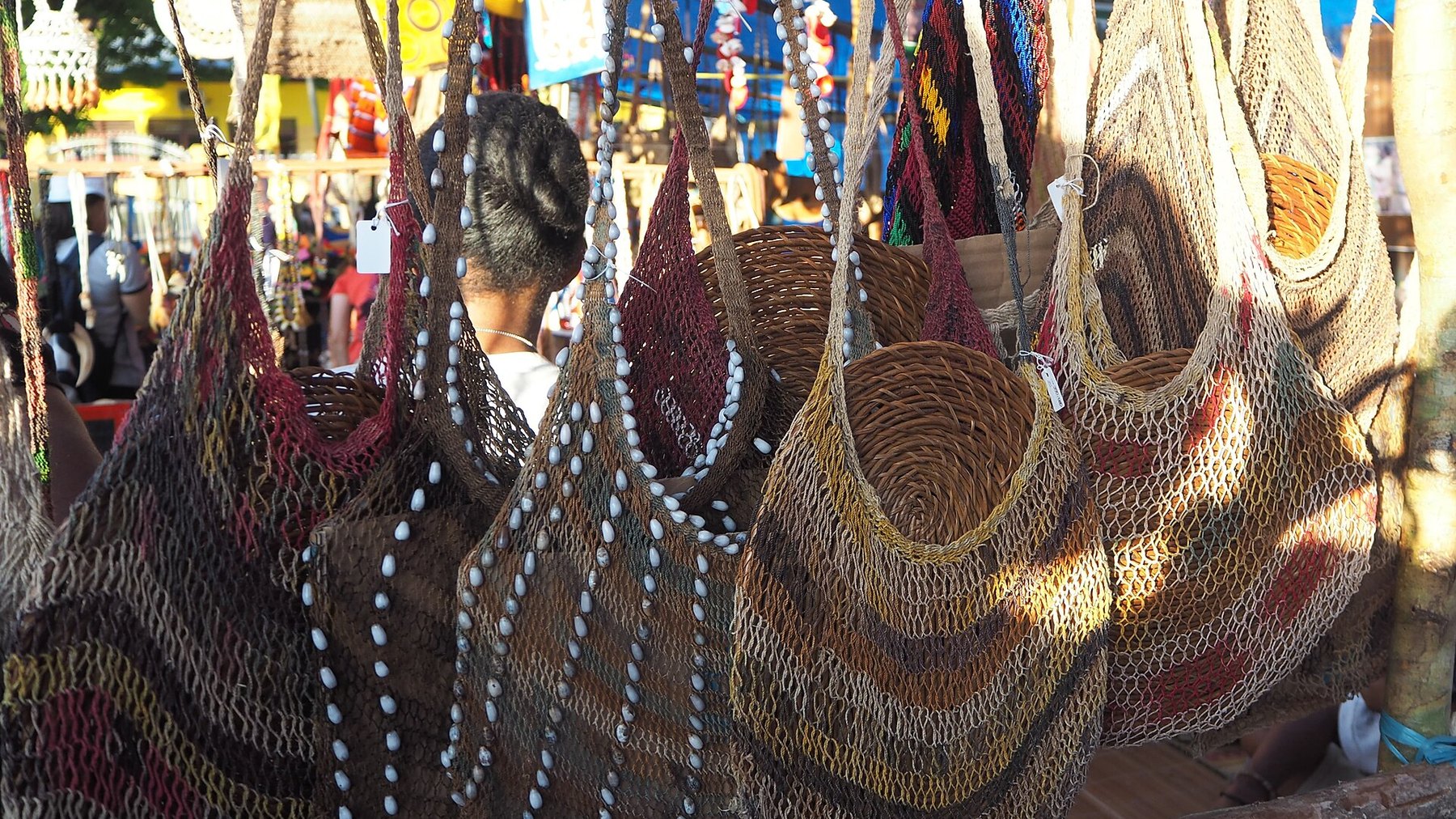
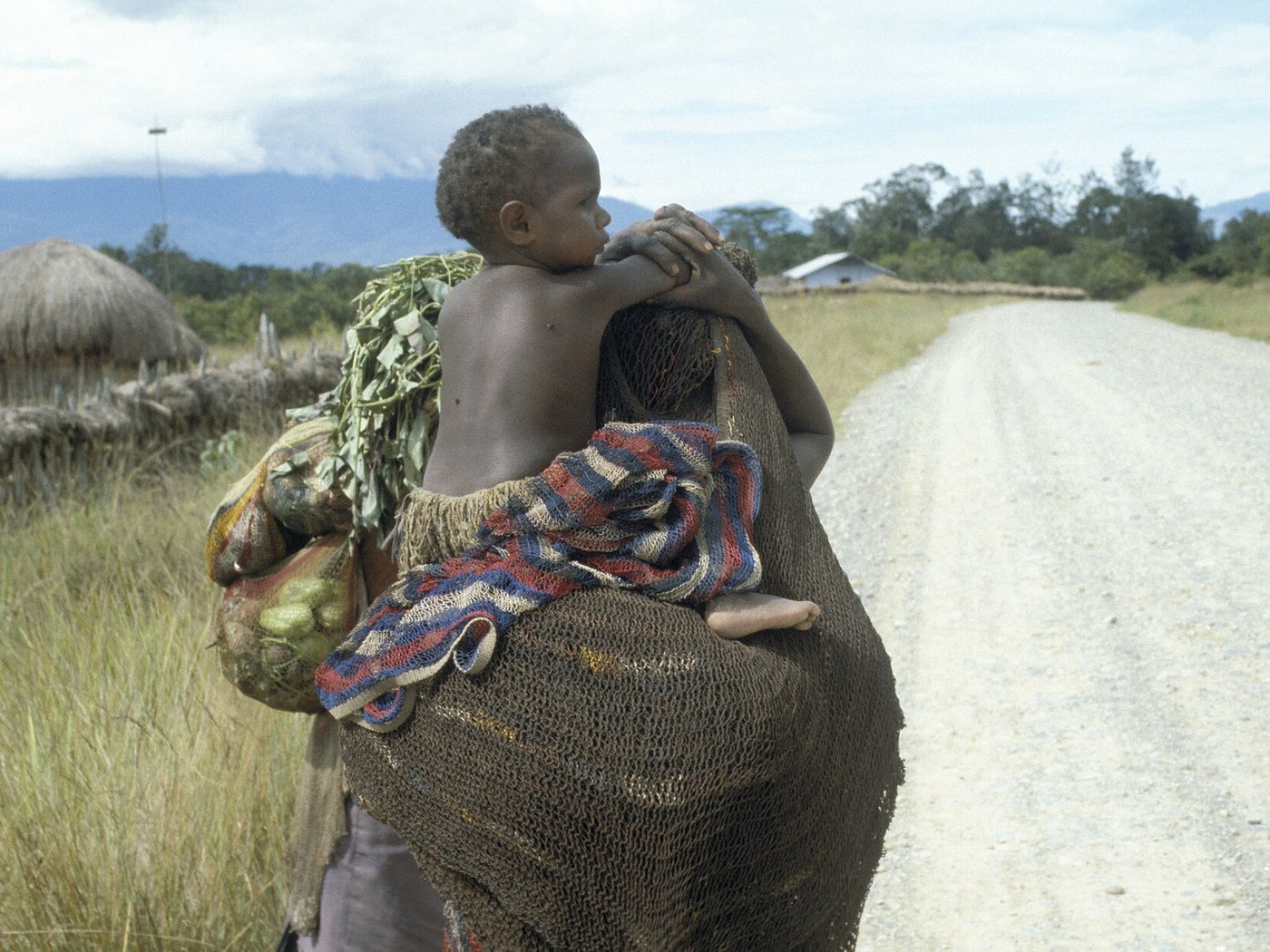
Noken is a knotted net or woven bag made by hand from wood fibre or leaves. Men and women use it to carry garden produce, fish, firewood, babies and small animals, and also for shopping and for storing things at home.[2] In the highlands, women carry young children and even pigs in a noken.[3] It can be hung around the neck or worn with its strap over the head,[1][3] so that the bag rests on the back, as in the photo below.
There is no single noken. Papua is home to more than 250 tribes, and each has its own tradition of making it, from the materials to the method and the way it is used.[4] The name often changes with the material.[1]
Noken has become part of the identity of Papua's peoples.[5] In December 2012, UNESCO added it to its List of Intangible Cultural Heritage in Need of Urgent Safeguarding, because fewer people were making and using it.[2][4] UNESCO notes that the way noken is made varies between communities, and that the bags come in many patterns and sizes.[2] Since then, 4 December has been celebrated each year as World Noken Day, and in Papua the day is marked with a noken festival.[3][4]
Everything starts in the forest
Every noken begins with a walk into the forest or the garden. The plants used vary from place to place, but each community knows which ones give the strongest fibre and the best colours.

- Bark. The most common source is the inner bark of young trees. Some weavers use the bark of seven tree species, including figs, breadfruit and melinjo (Gnetum gnemon), and rate melinjo the best, judging fibre by its length, density and fineness.[3][6] Other makers use mahkota dewa (Phaleria macrocarpa) alongside melinjo,[4] or combine mincauw bark with fibre from pineapple leaves.[7]
- Leaves. Pandanus leaves, known locally as daun tikar (mat leaves), are used for noken in several parts of Papua,[8] and strips of pandanus are also plaited into small bags and baskets.[9] Pineapple leaves are another source of fibre, and for some weavers the main one.[7][10]
- Orchid fibre. The yellow fibre of the golden orchid (Diplocaulobium aureicolor) is used to decorate noken, bag straps, bracelets and headdresses. The orchid grows naturally only on the island of New Guinea, where it clings to trees between 250 and 2,300 metres above sea level without harming them.[11]
- Natural colours. Colours come from plants too, and UNESCO notes that noken thread is sometimes coloured with natural dyes.[2] Black and orange can come from seeds, yellow from turmeric and green from pounded leaves.[6]
How a noken is made
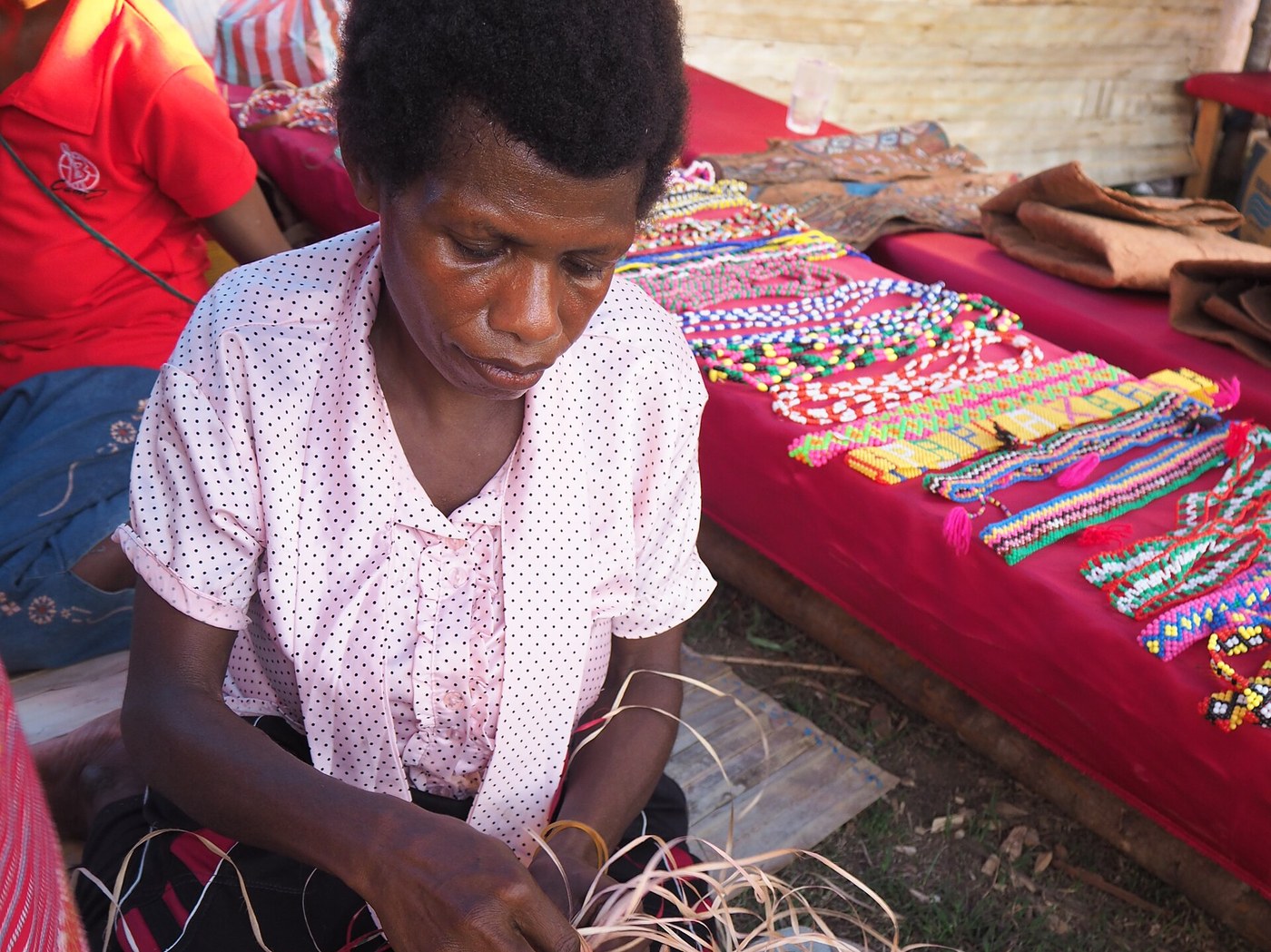
There are two main ways to make a noken: knotting a net from thread, or plaiting a bag from strips. Both are done entirely by hand, and UNESCO notes that the craft takes several months to master.[2] Each method follows four main steps.
Knotted noken are made from thread. UNESCO describes the general method: branches, stems or bark of certain small trees or shrubs are cut, heated over a fire and soaked in water, and the fibre that remains is dried and spun into a strong thread.[2] A study of noken makers in Papua records the work in these steps.[6]
- Separate the bark. The inner bark is separated from the outer bark.[6]
- Dry and soak. The inner bark is dried in the sun for a day or two, soaked for about a day and dried again.[6]
- Make the thread. The fibre is scraped and split by hand into strands about 2 millimetres wide, and two strands are rolled together on the thigh, with a little ash, to make a strong thread.[6] Rolling the fibre is hard on the skin, and weavers may have to rest when the thigh starts to feel hot.[7]
- Knot the bag. The bag starts with an oval base, and the body is knotted up around it.[6]

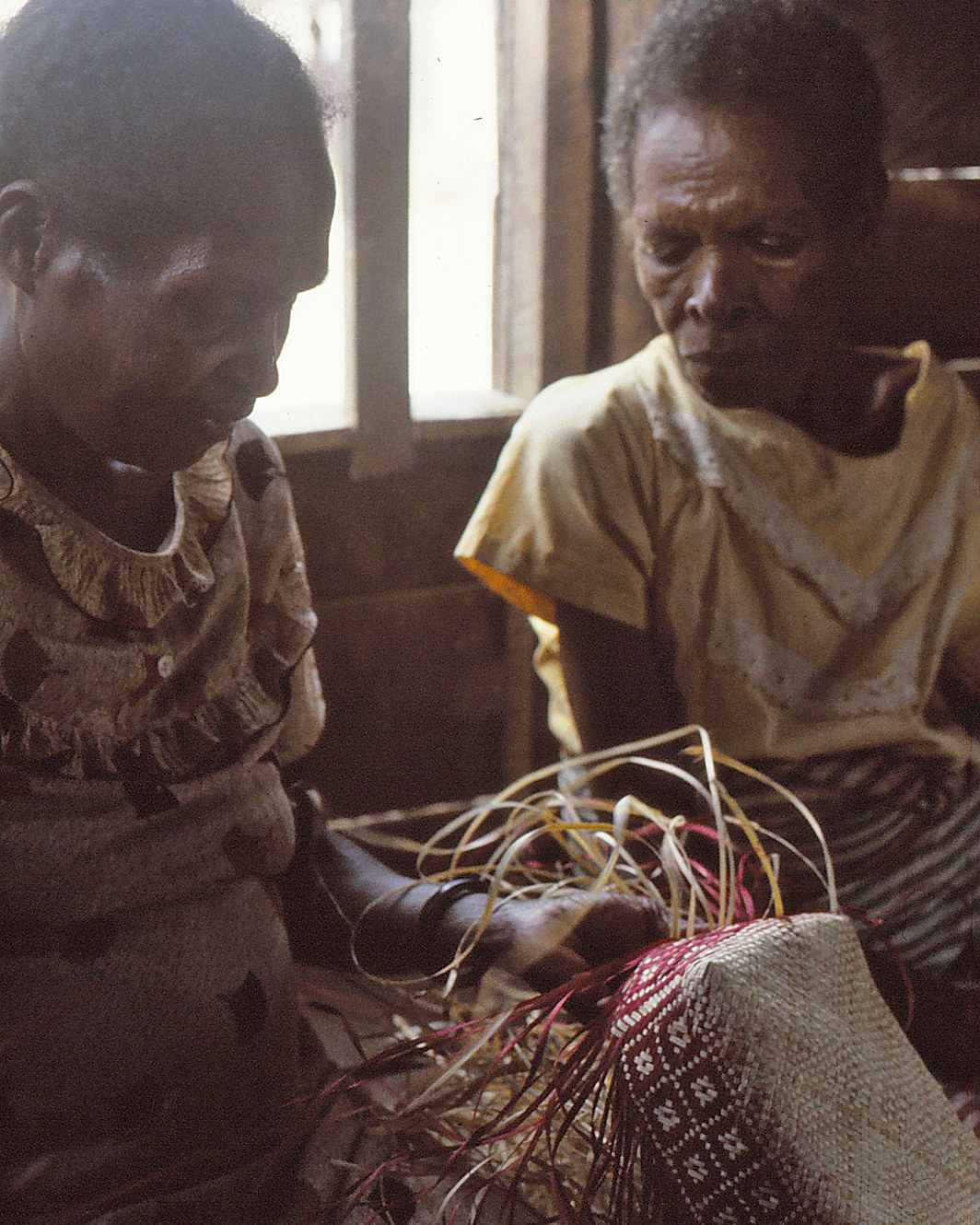
Plaited noken are made from flat strips of bark or leaf. A series of photographs taken in Papua in 1986 records the work in these steps.[9]
- Prepare the strips. Bark or leaves are cut into long, thin strips, ready for plaiting.[9]
- Start the base. The strips are crossed and woven together by hand to form the base of the bag.[9]
- Plait the sides. The sides are plaited up from the base. Some bags carry a coloured pattern, and several women may work on the same bag.[9]
- Add the strap. A strap is plaited separately, in the photographs by the woman who started the bag, and fixed to it in two places.[9]

Either way, a noken is slow work. Depending on its size, a bag can take weeks to make.[1] Knotting a single noken can take almost a month, and drying the fibre alone can take close to a week before any knotting begins.[7]
One bag, many traditions
Because each of Papua's peoples has its own way of making and using noken, the bag says a great deal about who made it and what it is for. Four examples show how much it varies across Papua.
- Big bags and small bags. Some makers produce noken in two sizes. Large ones carry heavy loads such as harvests, firewood, game and babies, while small ones hold personal items or, for students, books and stationery.[3][6]
- Pineapple-fibre noken. There are weavers who make their noken mainly from pineapple fibre, using three kinds of pineapple. Older, tougher leaves are cut and scraped with metal to free the fibre, which is dried in the sun for at least a day and spun into yarn. Teak and annatto colour it red, turmeric yellow and a shrub called Melastoma blue, while the pineapple fibre itself gives white. The coloured lines form motifs that represent bird feathers, animal teeth, beads and seeds.[10]
- Orchid noken. Some highly valued noken are made with the yellow fibre of the golden orchid and are worn only by men of high standing, as a sign of wealth, power and identity.[11] The men who make them draw on nine wild plant species, including orchids, ferns and rattans, and use different techniques to achieve particular colours and textures.[12]
- Bark noken of the lowlands. There are also lowland weavers who make their thread from the bark of local trees such as dakwab and paquai, and who crush annatto seeds (Bixa orellana) and rub them onto the thread to make it red.[8]
What these traditions share is that each depends on particular plants growing nearby, and on people who know where to find them, when to harvest them and how to turn them into thread.
How the skills are passed on
Almost all noken makers are women, often called mama-mama Papua.[3] In some communities, only women weave noken, and mothers teach their daughters by involving them in every step of making it.[3][6] In others, women lead every stage of the work, children help to harvest the leaves, and the knowledge is passed on by word of mouth from one generation to the next.[10] Learning can start as early as the first year of primary school, and a weaver may practise the craft for decades.[7]
Not every noken is women's work, though: as noted above, the orchid noken worn by men of high standing is made by men.[12]
Making noken can also be a shared activity. In a group, the work can be split, with half the members gathering the bark and pineapple fibre while the other half process it and weave.[7] Women have also organised to run training in noken weaving and to plant the trees that makers use, alongside campaigns to protect land and forest.[4]
Writing the craft down helps too. Researchers who documented how orchid noken are made note that recording these practices helps pass the knowledge on to future generations.[12] And because noken is on UNESCO's urgent safeguarding list, Indonesia reports to UNESCO every four years on how the craft is being protected, most recently in 2024.[2]
What is putting noken at risk
Many of the threats UNESCO listed in 2012 are still being reported in Papua today,[2] and several pressures add up.
- Fewer young makers. UNESCO points to weaker passing-on of the skill, falling numbers of craftspeople, a lack of awareness and changes in the value people place on noken.[2] In some communities, most noken weavers are now 50 or older, and young people are reluctant to take part.[7] A researcher at Papua's archaeology centre has seen the same trend, with young people showing little interest in making noken and fewer older women left to weave it.[5]
- Factory-made bags and thread. Factory-made bags compete with noken,[2] and in some places nylon and other bought thread are replacing bark and pandanus.[5] Some colours now come from factory-made dyes too: there are weavers who use them for blue and green,[8] and photographs from 1986 already show patterns in factory-made red paint.[9]
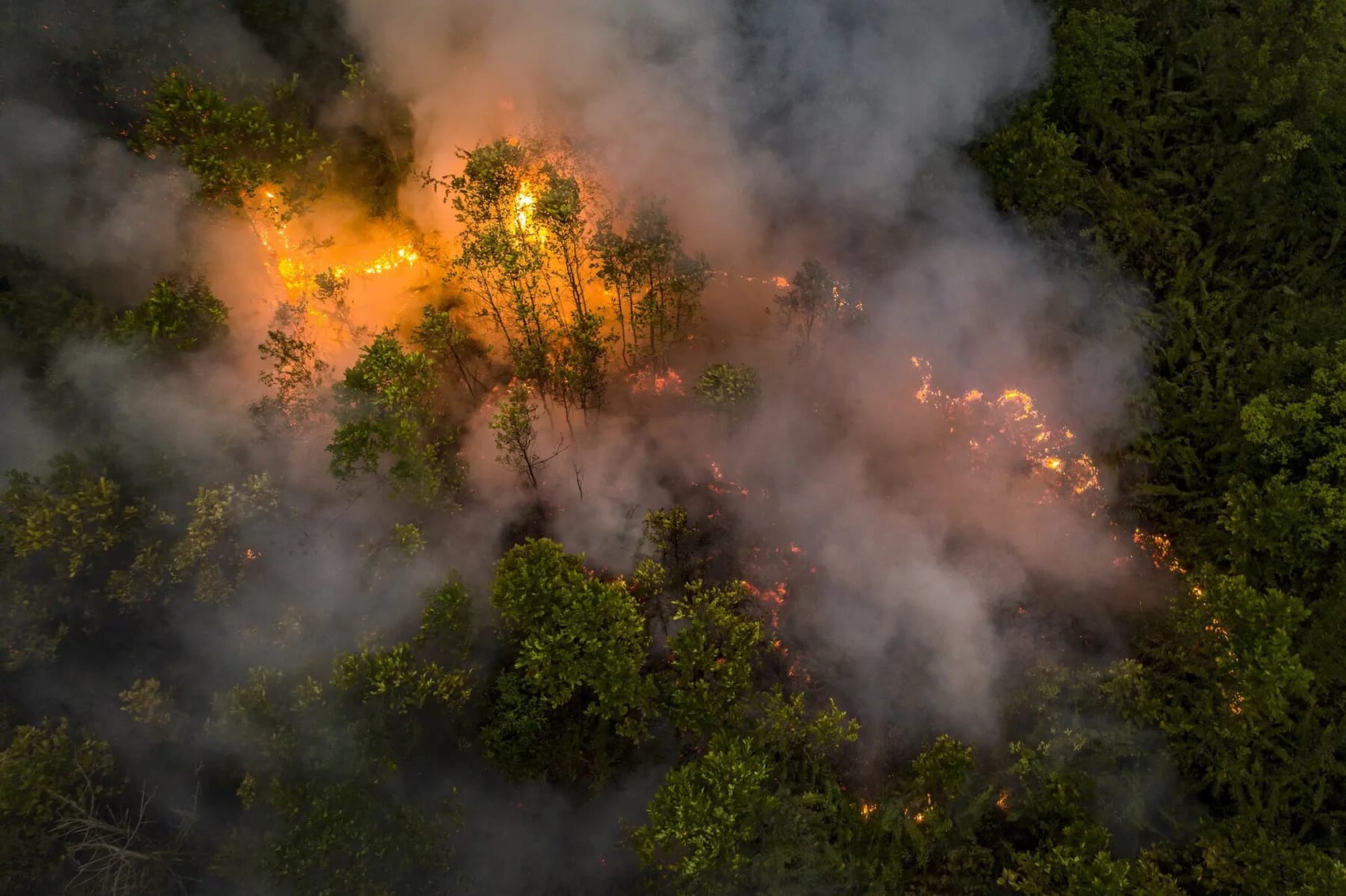
- Shrinking forests, scarcer materials. UNESCO lists the difficulty of obtaining traditional materials among the threats.[2] In some places, bark is getting scarce: makers have had to go further to find it, and melinjo is now hard to find near some villages.[4][8] Forest clearing adds to this. There are noken-making areas where many trees hundreds of years old have been felled under logging permits.[4] Titus Pekei, who proposed noken to UNESCO, warns that large-scale clearing and climate change threaten the raw materials of noken, and that floods, landslides and droughts disrupt the work itself.[3]
At Canopy Carbon, we work alongside these communities
Every noken depends on the forest. Its bark, leaves, orchid fibre and plant dyes all come from the land around each village, and researchers who studied pineapple-fibre noken concluded that keeping noken in use helps preserve the habitats of the plants it is made from.[10] As Titus Pekei puts it, looking after noken also helps look after Papua's rainforest.[3]
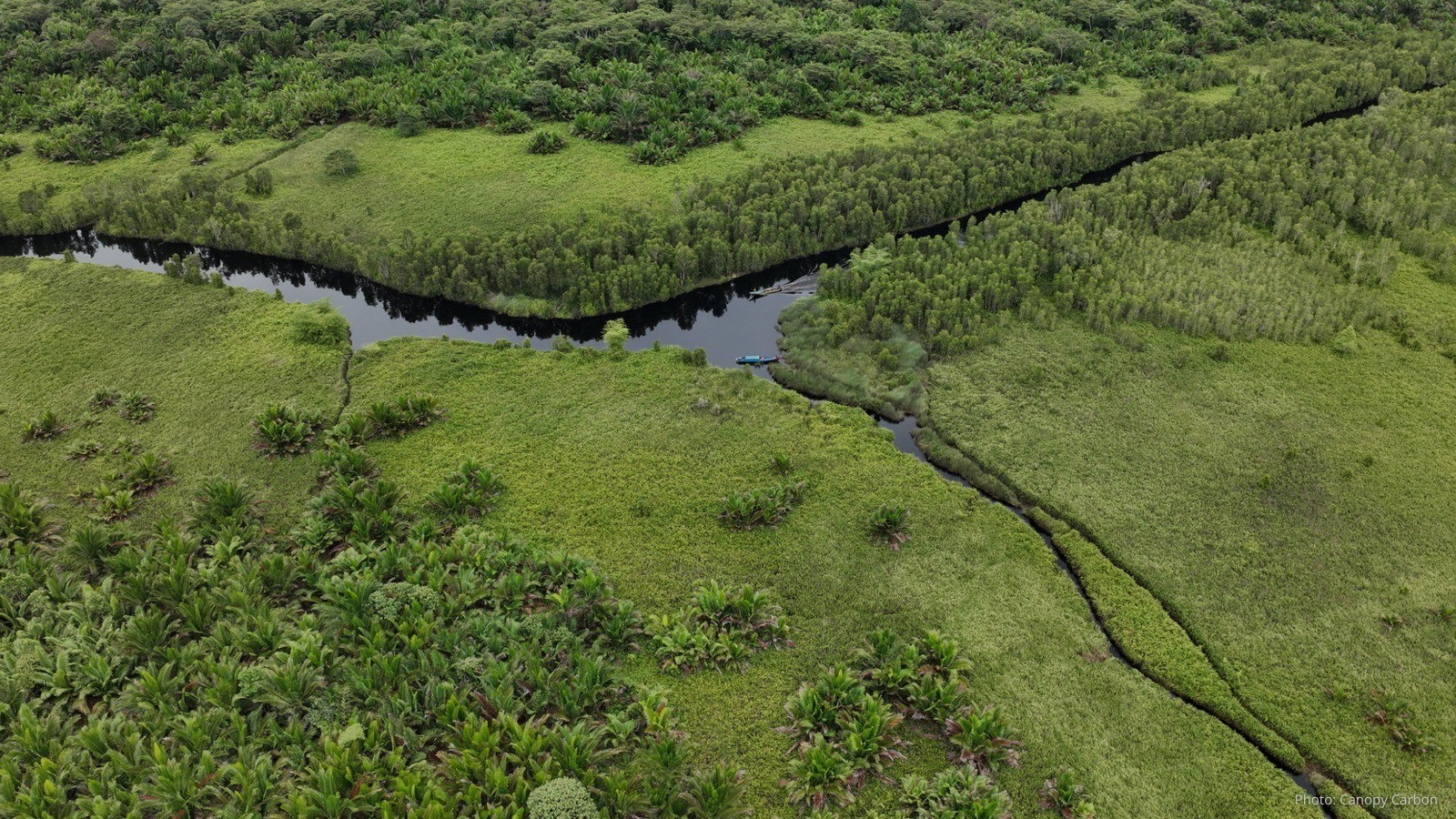
That is why protecting forests is at the heart of our work. Our peatland projects are in Papua, and the forests around them are part of the landscape we work in. We work side by side with neighbouring villages, so that looking after the forest and the peat becomes part of everyday life.
Our social team spends time living in the villages, listening to and learning from the people who live there. The noken that families make and carry every day shows what healthy forests mean for people's lives.
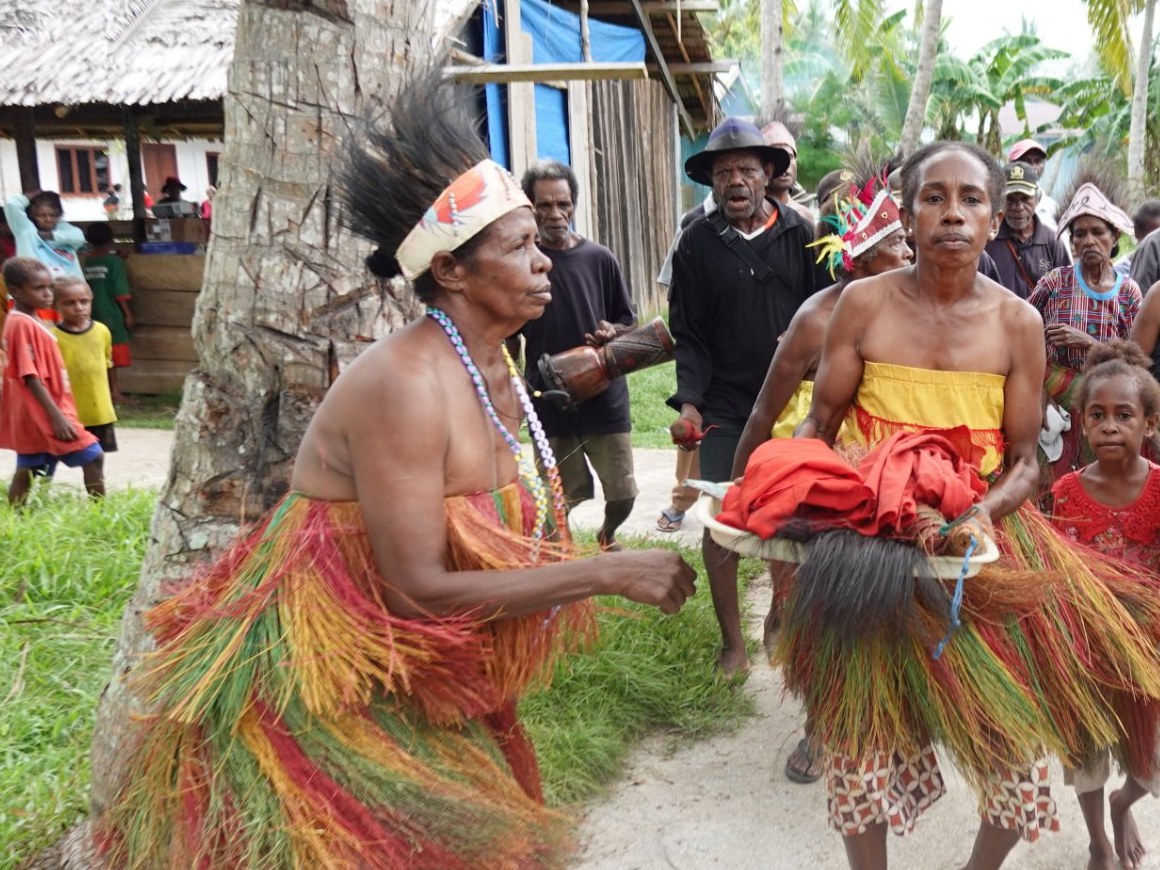
When forests stay healthy, so do the materials, skills and knowledge that families have passed down for generations. Protecting Papua's forests means protecting the way of life of the communities who call them home.
Follow Canopy Carbon on LinkedIn for more stories from Papua.
Sources
1. Noken, tas unik asal Papua - CNN Indonesia (31 May 2016)
2. Noken multifunctional knotted or woven bag, handcraft of the people of Papua - UNESCO (2012), List of Intangible Cultural Heritage in Need of Urgent Safeguarding
3. Hari Noken Sedunia: perubahan iklim ancam keberadaan noken Papua - Mongabay Indonesia (11 December 2023)
4. Merajut noken dari benang melinjo dan mahkota dewa - Mongabay Indonesia (23 April 2020)
5. Keberadaan noken Papua terancam punah karena krisis iklim, mengapa bisa? - Good News From Indonesia (21 December 2023)
6. Rekonstruksi etnoteknologi noken kulit pohon oleh Suku Yali di Kampung Hubakma, Kabupaten Yalimo - Walianggen, Y. & Rumatora, A. (2016), Jurnal Kehutanan Papuasia 2(1):17–23
7. Semangat perempuan-perempuan Arfak melestarikan noken - ANTARA (17 September 2024)
8. Identifikasi bahan dan pembuatan noken tas tradisional serat kayu pada masyarakat lokal Kampung Rhepang Muaif, Distrik Nimbokrang, Kabupaten Jayapura - Keiluhu, H. J., Chrystomo, L. Y., Yuliana, S. & Silitonga, R. (2024), Jurnal Biologi Papua 16(1):51–61
9. Colour slides from the L. Visser and B. Voorhoeve collection, including a series on plaiting noken from strips of bark and pandanus leaf - Papua Heritage (photographed 1986, digitised 2024), Flickr, public domain
10. Ethnobotany and conservation applications in the noken making by the Sougb Tribe of West Papua, Indonesia - Saiba, Y., Ungirwalu, A., Murdjoko, A., Brearley, F. Q. et al. (2023), Biodiversitas 24(8):4577–4583
11. Anggrek emas, tumbuhan endemik dari hutan Papua - Mongabay Indonesia (20 December 2025)
12. The indigenous art of orchid noken making by the Mee Tribe in the highland of Central Mountains, Indonesian Papua - Runtuboi, Y. Y., Padang, D. A., Peday, M. H. et al. (2023), Biodiversitas 24:3881–3890