Markets
From a Guatemalan Tree-Planting Bet to a Global Registry Race: A Brief History of the Carbon Market
Four decades after the first land-based offset, the carbon market is still building the infrastructure needed to prove that its central bet can be trusted.
Long before anyone used the term "carbon offset," economists were laying the theoretical groundwork for it. In 1960, Ronald Coase published "The Problem of Social Cost," an essay that would become the intellectual foundation for market-based approaches to pollution - the idea that, given clear property rights, the cheapest place to reduce an externality is not always where it was created.[1] In 1977, physicist Freeman Dyson floated a more literal version of the idea in a paper on controlling atmospheric CO2, proposing large-scale tree-planting as a mitigation strategy.[1] What follows is the story of the carbon market that grew out of those ideas, in both of its forms: the compliance schemes governments built to enforce binding emissions caps, and the voluntary registries that businesses and project developers built alongside them.
The first offset, 1988
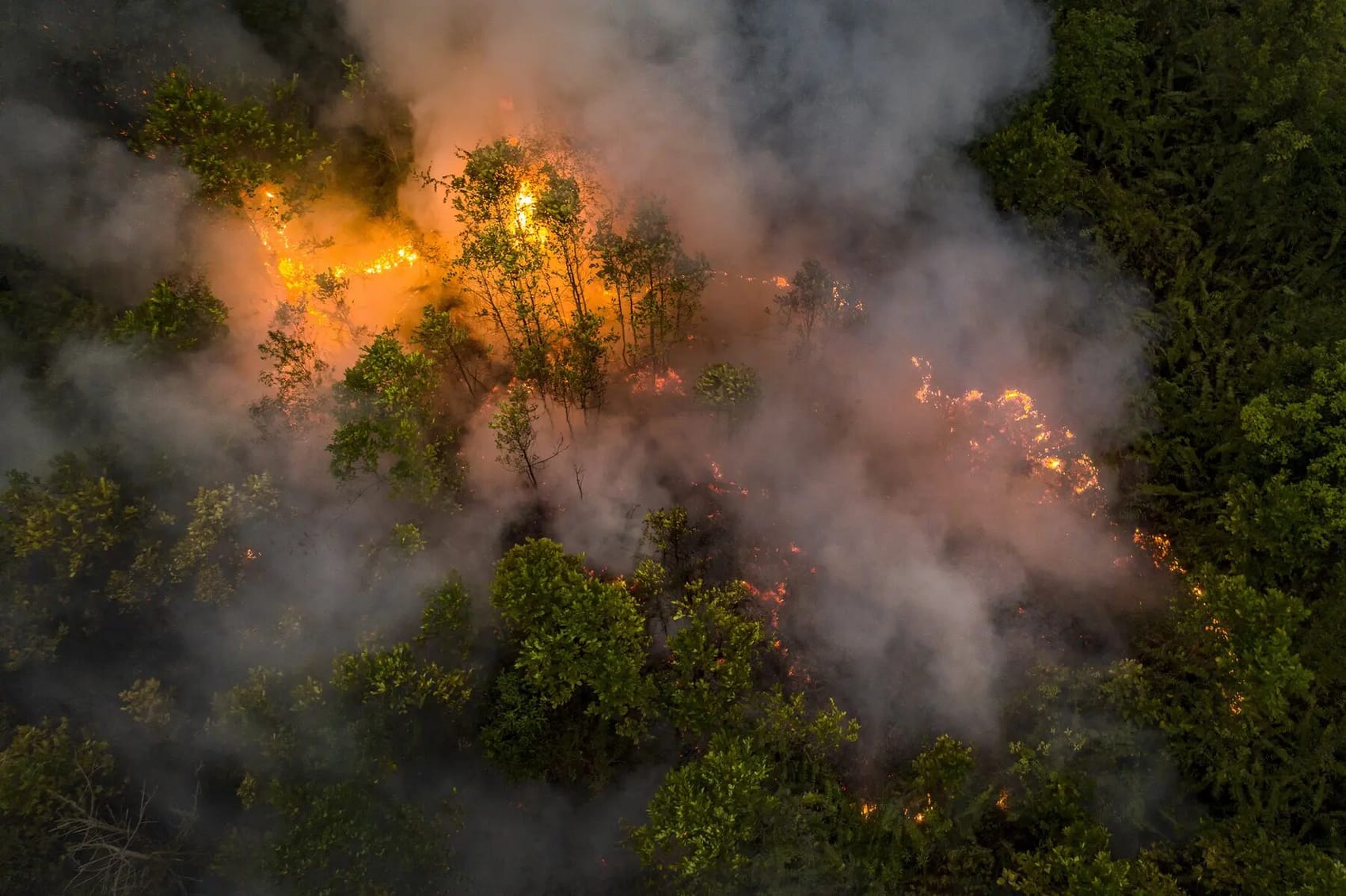
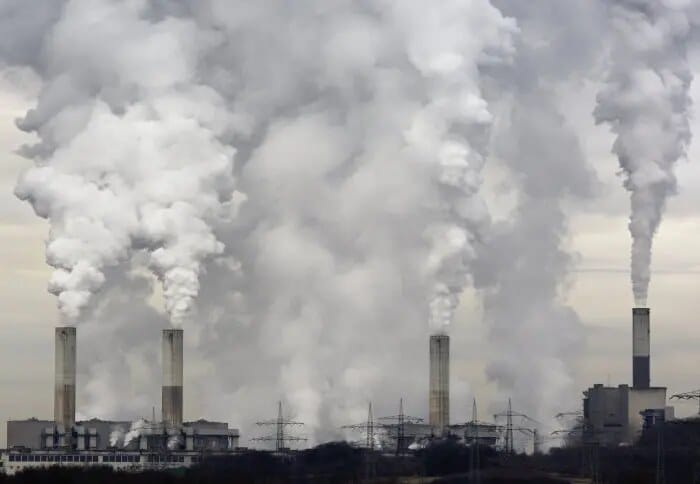
Theory became practice in 1988, when the US energy company Applied Energy Services funded the planting of 52 million trees in Guatemala, explicitly intended to offset the emissions of a coal plant the company was building in Connecticut.[1] It is widely regarded as the first land-based carbon offset project - a single corporate bet that a forest on one continent could meaningfully balance a smokestack on another, years before any formal market existed to verify, price or trade that claim.
From acid rain to Kyoto
The regulatory scaffolding that would eventually support carbon trading was actually built to solve a different problem first. The 1990 US Clean Air Act amendments authorised a sulphur dioxide emissions trading scheme to tackle acid rain, and its success became the template regulators reached for a decade later when designing carbon markets.[1] That template arrived formally in 1997, when the Kyoto Protocol established three "flexible mechanisms" for meeting emissions targets, including the Clean Development Mechanism (CDM) - the first large-scale system allowing industrialised countries to fund emissions-reducing projects in developing countries and count the results toward their own targets.[1] Two years later, in 1999, the International Emissions Trading Association formed as the first business-focused carbon trading group, signalling that a commercial ecosystem was starting to organise around the new instrument.[1]
Markets scale, then stumble
The 2000s saw rapid institutional build-out: the UK launched the first economy-wide emissions trading scheme in 2002, the EU Emissions Trading System followed in 2005, and REDD+ - the framework for reducing emissions from deforestation and forest degradation, central to nature-based carbon ever since - entered international climate negotiations that same year at COP11.[1] The voluntary market matured alongside the compliance one: the Verified Carbon Standard began in 2005 as, in its own account, "a few good ideas scribbled on a piece of paper," before the Verified Carbon Standard Association was formally established in Switzerland in 2007 - the organisation known today as Verra.[2] Gold Standard, founded by WWF and a coalition of NGOs around the same period, established itself as the other dominant voluntary registry, with a particular emphasis on verified co-benefits alongside emissions reductions.
By 2008, global carbon markets - compliance and voluntary combined - had reached a value of roughly $118 billion.[1] The good times did not last uninterrupted. As the CDM came under growing scrutiny over the credibility of its baselines, a wave of oversupply and shifting policy sentiment triggered what market participants came to call the "carbon panic" of 2012, when CDM credit prices collapsed to under $3 per tonne.[1]
Paris, scandal, and the integrity reckoning
The 2015 Paris Agreement's Article 6 created a new generation of market-based mechanisms for international cooperation on emissions reductions - but it took until COP26 in 2021 for negotiators to finalise the detailed rulebook governing how countries would avoid double-counting the same reduction twice.[1]
Even as the rulebook came together, the voluntary market's credibility came under renewed pressure. In 2022, a UN report explicitly warned against "net-zero greenwashing," calling for stronger integrity standards across voluntary carbon markets - a warning that anticipated a string of independent investigations in the years that followed, questioning whether some forest carbon credits, particularly REDD+ projects, had overstated the emissions reductions they claimed to deliver.[1]
Where the market stands now
The current chapter of this story is being written largely through registries and standard-setters working to rebuild trust: the Integrity Council for the Voluntary Carbon Market (ICVCM) and its Core Carbon Principles, tighter national oversight in producer countries, and new national infrastructure built to close the gaps older systems left open. Indonesia's own forestry regulator has aligned its 2026 carbon-trading rules with the ICVCM's Core Carbon Principles,[3] while the country's Ministry of Environment has separately stood up a new national registry, SRUK, that it describes as "the single source of truth for every carbon unit in Indonesia," built specifically to prevent double counting and connect domestic transactions with international registries.[4] Nearly forty years after 52 million trees went into Guatemalan soil to offset a Connecticut coal plant, the fundamental bet behind the carbon market, compliance and voluntary alike, has not changed. What has changed, slowly and unevenly, is the infrastructure being built to make sure that bet can actually be verified.
Sources
1. Timeline: The 60-year history of carbon offsets - Carbon Brief
2. VCS Turns 10! Celebrating our History and Looking to the Future - Verra
3. New Forestry Carbon Trading Regulation Opens Market to Communities - IKI Indonesia
4. Sistem Registri Unit Karbon (SRUK) - Ministry of Environment / BPLH, Republic of Indonesia